
What is a UGC video?
What is a UGC video?
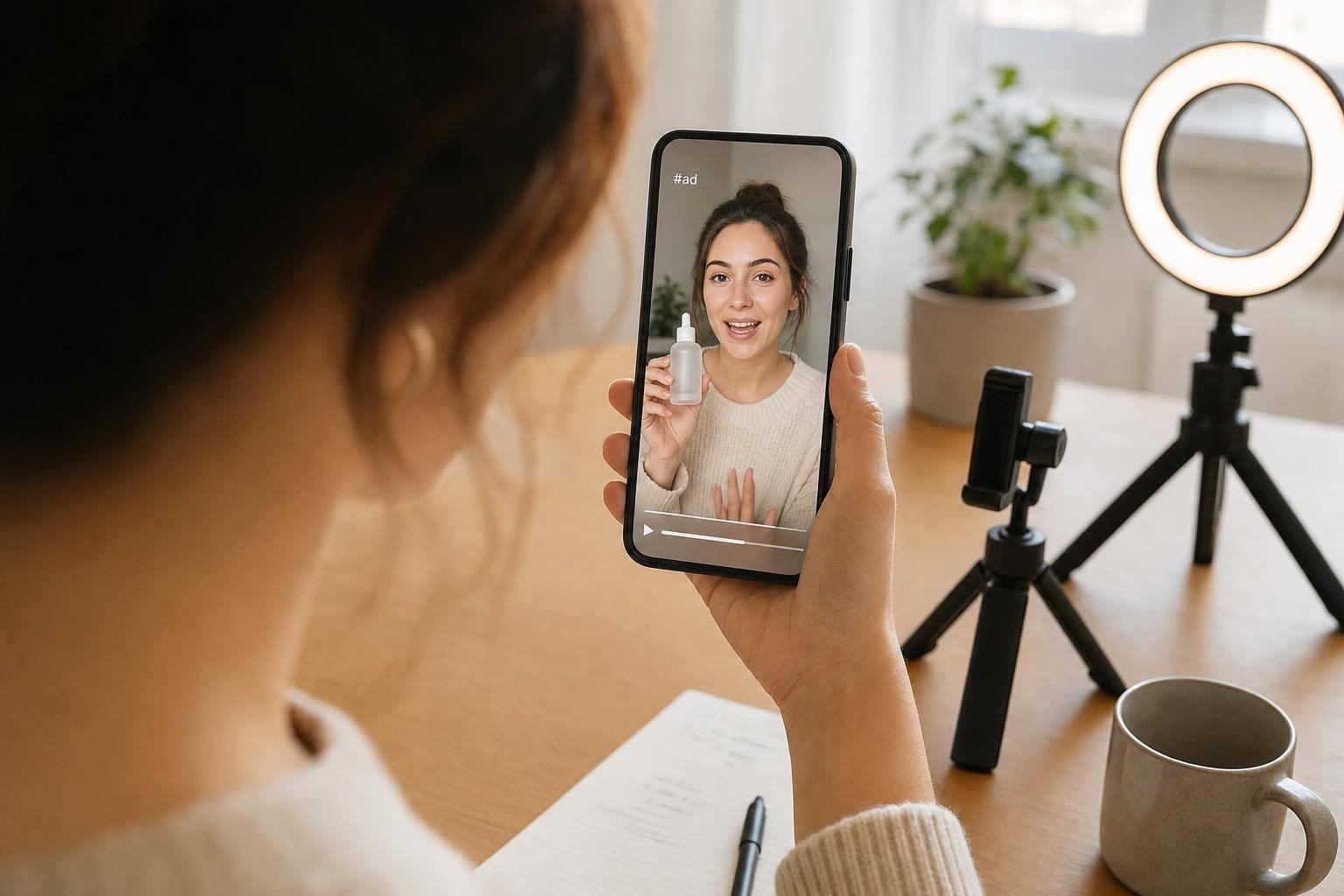
A UGC video is a video made by a user, customer, fan, or hired creator that feels like a normal social post, not a polished ad. You’ll usually see it on TikTok, Instagram Reels, and YouTube Shorts. The style is simple: direct-to-camera, casual speech, and a hook in the first 1–3 seconds.
Here’s the short answer:
- UGC = user-generated content
- It often looks like a review, demo, unboxing, testimonial, or selfie clip
- It works on social because it feels personal and easy to watch in-feed
- Brands use it to test angles, post more often, and drive clicks
- If a brand paid for it, the sponsorship should be disclosed
- One stat stands out: 85% of consumers say video has led them to buy a product
If I want to spot a UGC video fast, I look for five things:
- A person speaking from their own point of view
- Casual, natural language
- A product shown in everyday use
- A format like a review or how-to
- A look that feels more like a post than a studio ad
Quick comparison
| Criteria | UGC video | Polished brand video |
|---|---|---|
| Who makes it | Customer, fan, creator, or presenter | Brand team or studio |
| How it feels | Casual and in-feed | Planned and ad-like |
| Common setting | Home, car, street, desk setup | Studio or controlled set |
| Delivery | Natural and direct | Scripted and polished |
| Common use | Reels, Shorts, TikTok, paid social | Brand ads, launch videos, hero content |
Put simply: if it looks like a person sharing a product opinion on social, it likely fits the UGC style.
What qualifies as a UGC video
A UGC video is a social video that feels native, personal, and unscripted. It usually comes from a customer, fan, or creator. That said, brands also use UGC-style videos made by creators or synthetic presenters to match that same in-feed feel. The main difference between UGC-style content and brand-made video is the looser, more natural delivery.
If the content is paid or commissioned, disclose that clearly.
Common traits of the UGC style
Most UGC videos share three clear signals:
- Speaking straight to the camera
- A conversational tone with natural speech patterns
- A fast hook in the first 1–3 seconds
Common UGC video formats
Here are some of the most common UGC formats on social platforms:
| Format | What it looks like |
|---|---|
| Customer testimonial | A real customer shares their experience with a product or service |
| Product demo | A creator walks through how a product works in everyday use |
| Unboxing | Someone opens a product on camera for the first time |
| Review | A direct, opinion-based take on a product's pros and cons |
| Selfie-style clip | A casual, handheld video shot from the creator's point of view |
These formats tend to work because they feel personal, direct, and native to social feeds. Next, compare UGC videos with polished brand-produced videos.
UGC video vs. polished brand-produced video
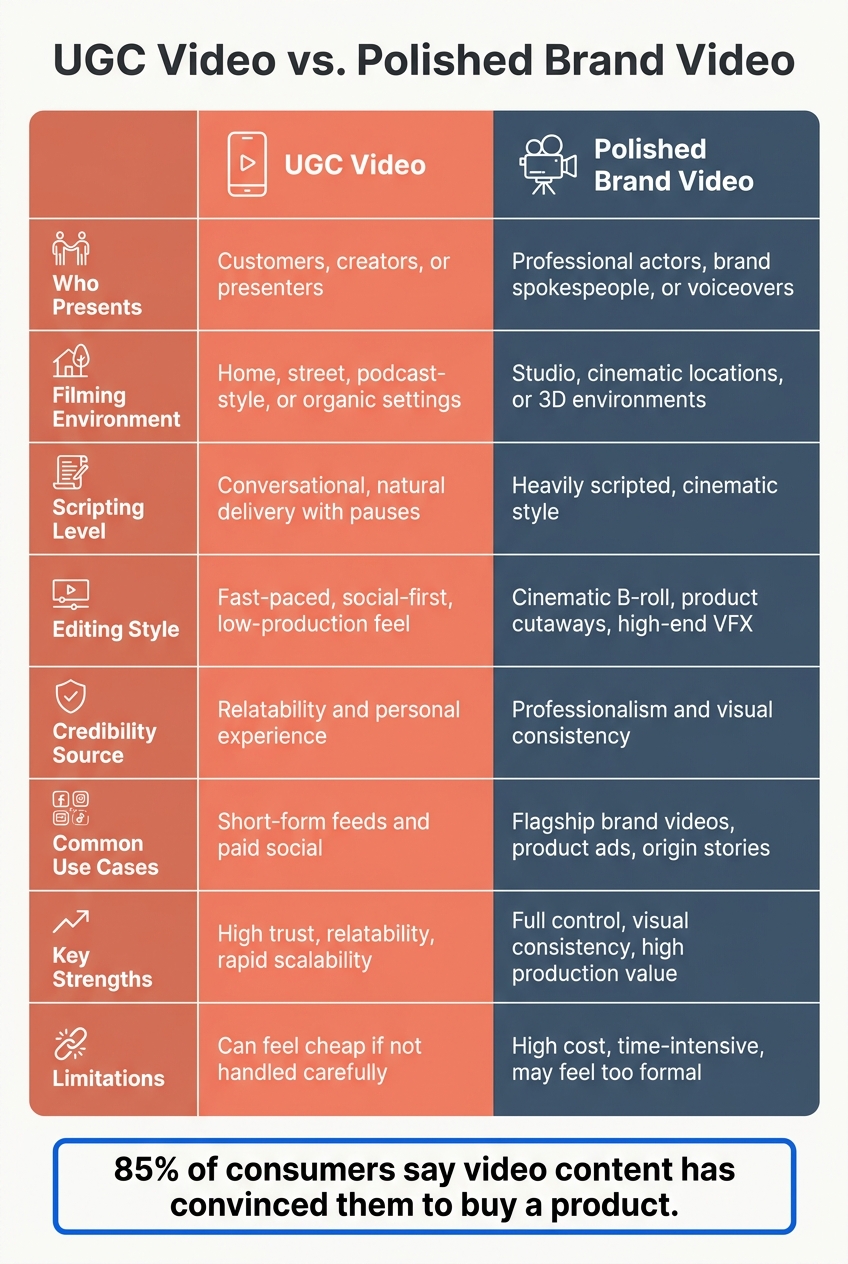
UGC Video vs. Polished Brand Video: Key Differences
The easiest way to tell these two formats apart is simple: who made it, and does it feel like an ad?
UGC videos tend to feel personal because a real person is sharing direct experience with a product. Polished brand-produced videos do the opposite. They use tight control, consistent visuals, and formal messaging to strengthen brand authority. That gap matters because each format is built for a different marketing job.
Here’s the clearest side-by-side breakdown.
Format, tone, and use: a side-by-side comparison
| Attribute | UGC video | Polished brand-produced video |
|---|---|---|
| Who presents | Customers, creators, or presenters | Professional actors, brand spokespeople, or voiceovers |
| Filming environment | Home, street, podcast-style, or other organic settings | Studio, cinematic locations, or 3D environments |
| Scripting level | Conversational, natural delivery with pauses | Heavily scripted, cinematic style |
| Editing style | Fast-paced, social-first, low-production feel | Cinematic B-roll, product cutaways, high-end VFX |
| Main source of credibility | Relatability and personal experience | Professionalism and visual consistency |
| Production process | User-submitted, creator-led, or AI-generated | In-house video team or full studio production |
| Common use cases | Short-form feeds and paid social | Flagship brand videos, product ads, and origin stories |
| Strengths | High trust, relatability, and rapid scalability | Full control, visual consistency, and high production value |
| Limitations | Can feel cheap if not handled carefully | High cost, time-intensive, and may be ignored if it feels too formal |
That contrast helps explain why brands lean on UGC video for attention, trust, and clicks on social platforms. It feels closer to something a friend would post than something a company spent weeks polishing. And on fast-moving feeds, that can make all the difference.
Why brands use UGC videos on social media
UGC feels less polished, more natural, and more at home on social platforms. That’s a big reason brands use it to grab attention fast. When a team needs social-first content that blends into the feed without the cost and setup of a studio shoot, UGC is often the go-to format.
How UGC videos support marketing goals
The biggest draw is trust. Customer testimonials, product demos, reviews, and selfie-style clips tend to feel native instead of ad-heavy. And that matters: 85% of consumers report that video content has convinced them to buy a product.
UGC also helps brands move fast on testing. Instead of putting all their budget behind one polished concept, they can try several angles, see what gets clicks or conversions, and then double down on what works.
It’s also a strong fit for product walkthroughs and before-and-after clips. Those formats can show the point of a product in seconds, which is often faster than standard promo footage. On top of that, social platforms tend to favor accounts that post on a steady cadence, so a higher volume of UGC can make it easier for brands to stay in front of people.
Permissions and disclosure rules to follow
If the content is paid or commissioned, disclose that clearly before it goes live.
Where UGC videos appear and how to spot them
Once you know what counts as UGC, the next step is simple: spotting it in your feed.
TikTok, Instagram Reels, and YouTube Shorts: where UGC shows up most
These are the three short-form platforms where UGC-style videos show up most often.
On TikTok, creator-led talking-head videos and street interviews are common UGC formats.
Instagram Reels often includes before-and-after clips and product use in everyday settings.
YouTube Shorts works well for quick recommendations and short how-to clips.
The platform matters. But the format and delivery matter even more. A UGC-style video usually feels like something a person would post, not something a brand carefully staged.
A quick checklist to identify a UGC video
Not every casual-looking video is UGC-style. To tell the difference, check for these five signs:
- Point of view: Is the video told from a creator's perspective?
- Context: Does it show the product or service in a real-life or relatable setting?
- Language: Is the tone conversational and personal, with natural speech?
- Format: Does it feel like a recommendation, review, tutorial, or demonstration?
- Organic feel: Does it look more like a social post than a polished commercial?
If most of the answers are yes, it fits the UGC style. Even if a video isn't fully casual in every way, it can still read as UGC-style when it keeps a creator-led point of view and a natural, personal delivery.
Conclusion: The clearest way to define a UGC video
A UGC video is creator- or customer-led content that feels personal and native, not like a polished ad.
The big difference comes down to how it feels. UGC looks and sounds like a real person sharing a real experience, not a brand pushing a message.
If it comes across like a natural post from a person, it fits the UGC style.
FAQs
Can brands create UGC videos?
Yes, brands can create UGC-style videos.
Classic UGC usually comes from customers. But brands can also make a synthetic version of it with AI.
That means they can produce content that looks like a selfie video, a quick product reaction, or a testimonial, without filming a real person from scratch. Instead, they can use AI presenters, digital avatars, or footage they already have.
The big idea is simple: the format feels casual and person-to-person, even though the brand made it.
Are UGC videos always unpaid?
No. UGC videos aren’t always unpaid.
Even though they use a user-generated style instead of polished brand production, companies often pay creators to make them. That gives brands the best of both worlds: content that feels more natural and relatable, while still matching their marketing goals and quality bar.
How do I know if a video is UGC-style?
A video is UGC-style when it feels natural and a little rough around the edges, like something a regular person made on their phone instead of a studio team.
You’ll usually notice things like selfie-style framing, natural light, and a casual, everyday tone. Common formats include testimonials, unboxings, reviews, and simple product demos. The end result feels more like a personal recommendation than an ad, which helps it fit smoothly into social feeds.