
Video Content Checklist: What Every Brand Should Post Monthly
Video Content Checklist: What Every Brand Should Post Monthly
Most brands don’t need more video. They need a better monthly mix. If I post only promos, people tune out. If I post only tips, I may get views but miss sales. A better plan is to publish a set mix each month: videos that teach, videos that build proof, and videos that drive action.
Here’s the short version:
- I start with the number of videos I can make every month and stick to it.
- I give each video one job: awareness, consideration, conversion, or retention.
- I turn one main video into versions for each platform by changing the hook, length, and format.
- I keep five video types in rotation: demos, testimonials, FAQs, short educational clips, and promotional videos.
- I check every draft for pricing, dates, claims, captions, rights, mobile fit, and channel format before posting.
- I track one main KPI per video type, such as watch time, shares, clicks, or conversions.
A monthly review matters because video performance changes fast. For example, short-form video often leads social engagement, and many marketers still report strong results from video across the funnel. So if one format gets more saves, comments, or sales, I keep it in next month’s mix and cut back on what falls flat.
If I want video to support growth each month, this is the simple rule: keep the mix balanced, track what each video is meant to do, and update next month’s plan based on results.
How to Build Your Monthly Video Mix Before You Publish
Map each video to a goal, funnel stage, and channel before you hit publish.
That step saves a lot of guesswork later. Instead of posting and hoping it lands, you know what each video is supposed to do and where it fits in the month.
Start with one core video. Then turn it into platform-specific versions for each channel. The message should stay the same, but the hook, length, and framing should shift based on where the video will appear.
Why does that matter? Because the same video rarely works the same way everywhere. A LinkedIn viewer, a YouTube viewer, and a TikTok viewer don’t watch with the same mindset.
Here’s the simple way to structure it:
- First, split the month by goal
- Then organize each video by funnel stage
- Then assign the right channel
This approach lets you get more reach from the content you already made without making it feel reused. It gives you a clear plan, keeps the message aligned, and makes each version feel like it belongs on that platform.
The Core Video Categories Every Brand Should Post Each Month
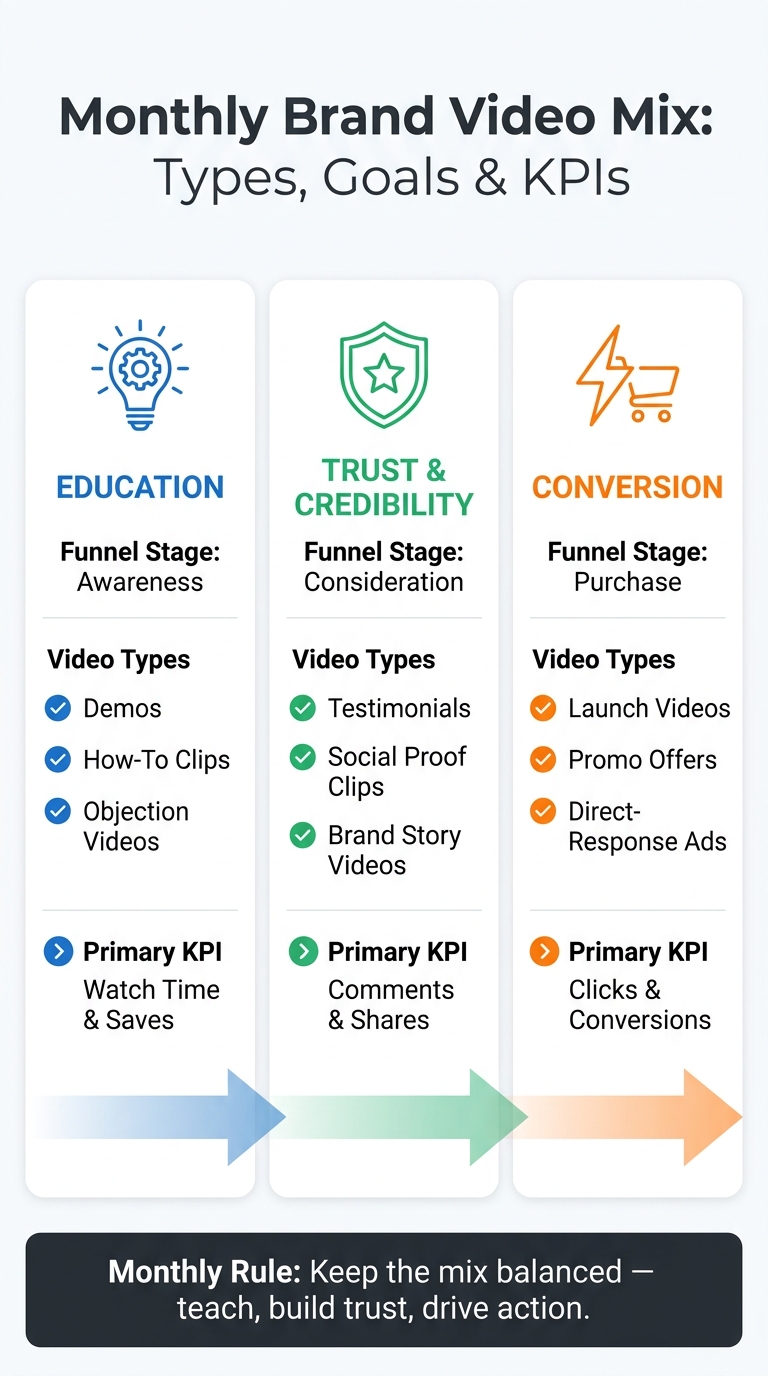
Monthly Brand Video Mix: Types, Goals & KPIs
Once you've set your monthly video volume, the next step is simple: divide that output across the content types that keep your brand in front of people and push them closer to a sale.
Every monthly video plan should do three things: teach, build trust, and drive action.
Here are the video types every brand should keep in the mix, each tied to a clear marketing outcome:
- Education - Demos, short how-to clips, and objection videos that help people understand your product and ease hesitation before they buy.
- Trust and credibility - Testimonials, social proof clips, and brand story videos that build confidence among people who are still weighing their options.
- Conversion - Launch videos, promo offers, and direct-response ads that push ready buyers toward a clear next step.
Each category lines up with a stage in the goal/funnel/channel plan from the previous section. Education supports awareness, trust content helps with consideration, and conversion videos help turn interest into purchase.
What Every Video Should Pass Before It Goes Live
After you batch and repurpose videos, put every draft through one last gate before it goes live. Skipping that final review can hurt your credibility fast. One wrong price, an expired promo, or an unlicensed track can turn a good video into a problem.
Before you publish, every video should clear a short, non-negotiable checklist.
Approval, Accessibility, and Channel Fit Checks
Start with the basics: does the video say the right thing and look on brand? Check product names, pricing, dates, and promo terms. Make sure legal claims and disclaimers are correct, and confirm that all music and footage rights are in place. If a customer or creator appears in the video, document their approval.
Then look at the viewing experience. Captions should be accurate. Audio should be clean. The video should also read well on mobile, where a lot of people will watch it. Last, review the thumbnail and export settings for each channel.
| Check Area | Check |
|---|---|
| Message and brand voice | Clarity, tone, and alignment with brand guidelines |
| Accuracy | Product names, pricing, dates, promo terms |
| Legal and permissions | Claims, disclaimers, music/footage rights, customer approvals |
| Captions and playback | Caption accuracy, audio quality, mobile readability |
| Channel fit | Aspect ratio, thumbnail, channel-specific export format |
Once a video passes this check, it’s ready for scheduling and performance tracking. After approval, track results by format so next month’s mix gets sharper.
How to Measure Results and Update Next Month's Checklist
Once a video is live, measure it by the job it was supposed to do.
Track the Right KPI for Each Video Type
Pick one main metric for each video type. Then connect the result back to the content bucket it came from - education, trust, or conversion - so you can see what's working and what needs a tweak.
| Video Type | Primary KPI |
|---|---|
| Education (demos, how-tos, objection videos) | Watch time and saves |
| Trust (testimonials, social proof, brand story) | Comments and shares |
| Conversion (launch videos, promos, direct-response ads) | Clicks and conversions |
| Short-form (Reels, Shorts, TikTok clips) | Views and replays |
| FAQ and evergreen content | Search impressions and saves |
Use the strongest signal from each format to decide what deserves another spot next month.
Final Checklist: What to Keep Posting Every Month
Review results every month and keep the formats that support your goals. For each content bucket, ask one simple question: did this video move people in the right direction?
If watch time is low on an educational clip, shorten it or change the hook. If a testimonial brings in strong comments, post another one next month. If a promo video converts, test a variation before the offer changes.
Keep your monthly mix balanced across all three buckets. Change the volume, not the mix - post less of what falls flat, do more of what hits, and carry the top formats into next month's plan.
FAQs
How many videos should I post each month?
Aim for a steady, balanced monthly video mix that supports both awareness and performance. How many videos you publish should match your team’s capacity, plain and simple.
Mix in different content types to keep things active without stretching your resources too thin:
- Product demos
- Customer testimonials
- Educational clips
- Brand stories
- Promotional offers
- FAQs
That kind of mix helps you show up across TikTok, Instagram Reels, YouTube Shorts, LinkedIn, and Facebook with a clear plan instead of posting just to fill the calendar.
How should I split videos across platforms?
Split your video content based on what each platform does best and what your audience wants in that moment.
Use TikTok, Instagram Reels, and YouTube Shorts for frequent educational clips, quick product teasers, and trending brand moments that can help boost reach. These platforms are built for fast attention, so short, punchy videos tend to work best.
Then use YouTube and LinkedIn for deeper product demos, customer testimonials, and brand story videos that need more attention and trust. That way, your brand stays active across channels while guiding viewers from awareness to conversion.
Which video type usually drives the most sales?
Product demonstration videos often drive the most sales. They show how a product works and put its benefits on display, which helps answer shopper questions and cut down on hesitation at the point of purchase.
That’s why they work so well for conversion goals.